
2026-08-21 ·
Repairing Storm Damage On Flat Roofs Near San Diego Bay
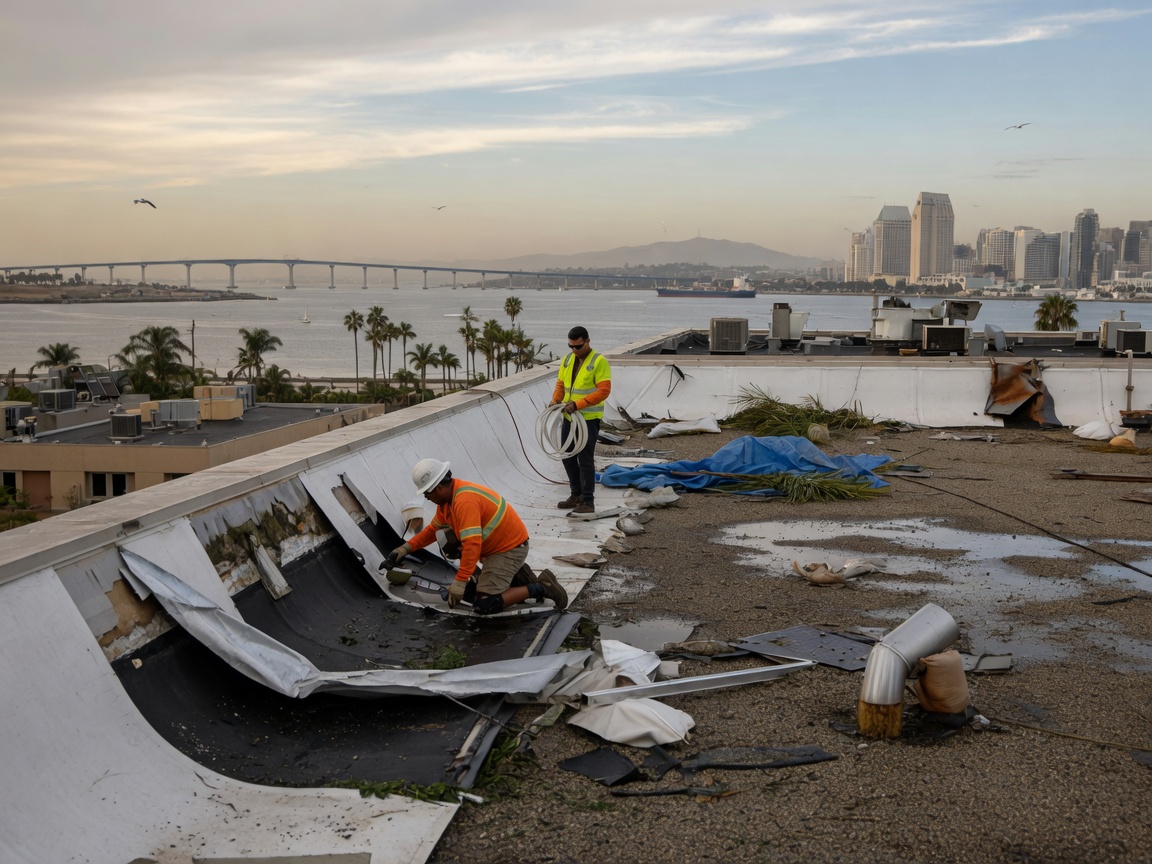
Storm damage on flat roofs near San Diego Bay starts with water intrusion at seams, drains, and penetrations after wind-driven rain. Owners in Downtown San Diego and nearby Coronado see these failures first because the mild Mediterranean climate still brings occasional intense winter storms that pool water on low-slope surfaces. Early intervention prevents interior leaks in the older commercial and mixed-use buildings common along the waterfront.
Identifying Storm Damage Signs on Flat Roofs
Flat roofs in the San Diego Bay area collect debris and standing water more readily than sloped roofs during the wet season. Check for blisters in the membrane, separated flashing around HVAC units, and clogged scuppers after each storm. In neighborhoods like North Park and Mission Valley, older buildings from the 1960s and 1970s often have built-up roofing that splits along expansion joints when wind gusts exceed 30 mph. Walk the roof the morning after rain and look for silt lines that mark previous ponding depths. Document any new cracks or lifted edges before they widen.
Common Storm-Related Failures Near the Bay
Wind and rain combine to push water under perimeter flashing and into the insulation layer on flat roofs throughout San Diego County. Properties within a few blocks of the bay in Downtown San Diego face added salt exposure that accelerates corrosion on metal components. La Jolla Cove and Pacific Beach homes with flat sections see similar issues when storms coincide with high tides. The county's typical 10–15 inches of annual rain arrives in short bursts rather than steady drizzle, so one event can overwhelm marginal drainage. These patterns differ from inland areas like La Mesa where wind is the bigger factor.
Step-by-Step Repair Process for Flat Roofs
Begin with a thorough roof inspection to map every affected area before any patching. Clean the surface, then apply compatible primer to seams and penetrations. For small breaches, embed mesh reinforcement in elastomeric coating; larger sections may require new modified bitumen sheets heat-welded in place. Flat roof repair crews working near the bay often replace deteriorated drain bowls and raise curb heights to improve future shedding. Always test the repair with a hose or simulated rain before leaving the site. Storm damage repair follows the same sequence but prioritizes temporary tarping when active leaks threaten interiors.
When Replacement Becomes Necessary
Repeated storm repairs on a flat roof near San Diego Bay usually signal the membrane has reached the end of its service life. Buildings in Mission Valley and Pacific Beach with original 1980s roofing often need full replacement once insulation is saturated. Replacement allows addition of tapered insulation for better drainage and new flashings rated for coastal exposure. The process takes 3–7 days depending on building size and weather windows. Owners should schedule work between November and March when storms are most likely.
Ongoing Maintenance to Reduce Future Damage
Schedule twice-yearly cleanings to keep drains clear before winter. In Downtown San Diego, add leaf guards on scuppers near Balboa Park trees. Reapply coating every 8–12 years on restored flat roofs to maintain UV and water resistance. Homeowners in Chula Vista and La Mesa can adapt the same schedule because the county shares similar rainfall patterns. These steps extend service life without requiring constant emergency calls.