
2026-08-21 ·
How Salt Air Corrodes Roofs In La Jolla
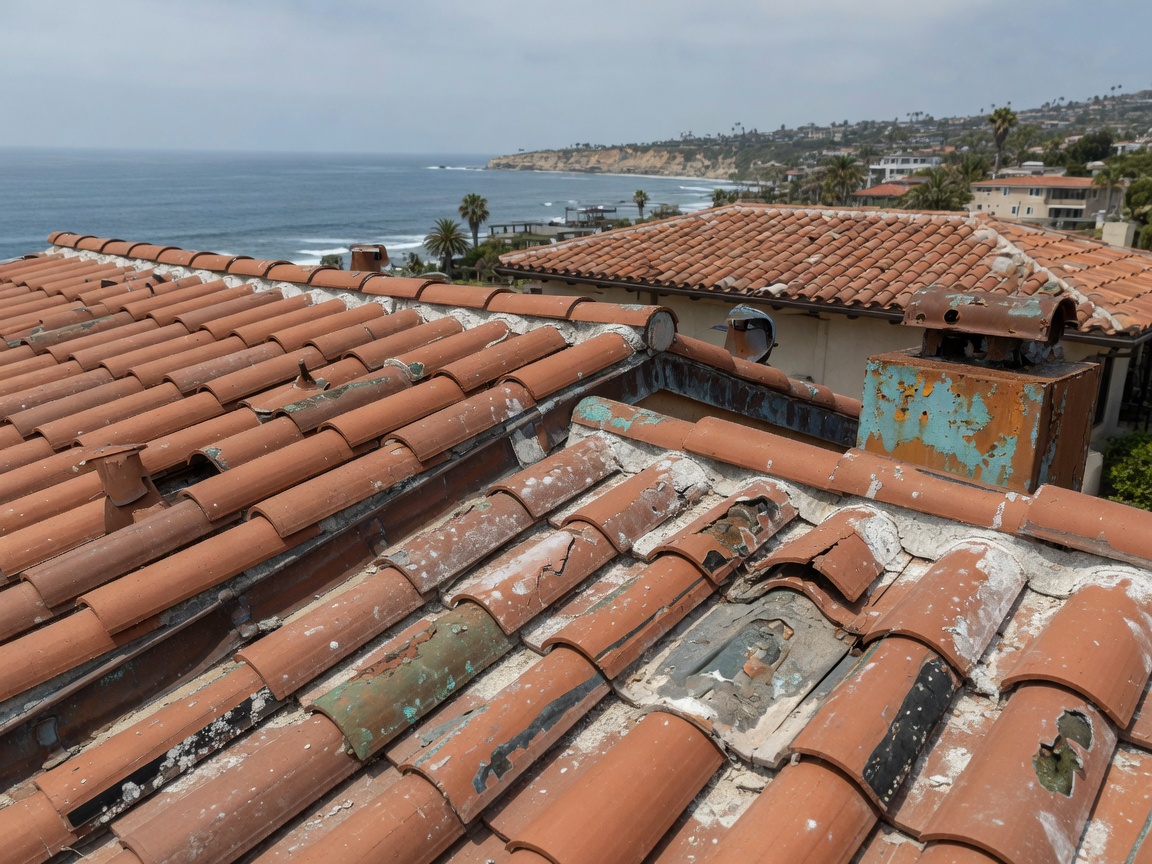
Salt air in La Jolla corrodes roof fasteners and flashing within 8–12 years on many coastal homes because the constant marine mist carries chlorides that attack galvanized steel and aluminum edges. The mild Mediterranean climate keeps temperatures moderate year-round, so moisture never fully dries before the next onshore breeze arrives, allowing corrosion to advance steadily instead of pausing in dry seasons.
How Marine Salt Penetrates Roofing Systems
La Jolla homes near the cove and along the bluffs face daily exposure to salt spray that travels inland on prevailing winds. This mist settles on exposed nail heads, ridge caps, and step flashing, where it mixes with dew and begins breaking down protective coatings. Older housing stock in the neighborhood often uses composition shingles over plywood decks, so once fasteners loosen from corrosion, water tracks along the sheathing seams and reaches the attic space. The same pattern appears in nearby Pacific Beach and Mission Valley when homes sit on higher ground with direct ocean views.
Corrosion starts at the cut edges of metal valleys and spreads under the shingles because the salt solution wicks into small gaps. In San Diego County’s coastal zone, this process moves faster than in inland spots like La Mesa or Chula Vista because humidity stays elevated even on sunny days. Homeowners notice dark streaks along valleys first, followed by granule loss where the underlying metal has thinned.
Visible Effects on La Jolla Roofs
Fasteners on tile and composition roofs turn white or red within a few seasons when the zinc coating fails. Once the steel core rusts, the nail head expands and lifts the shingle, creating an entry point for wind-driven rain common during winter storms. Flashing around chimneys and skylights shows pitting that leads to pinhole leaks, especially on homes built before modern stainless-steel hardware became standard.
In North Park and Downtown San Diego, where salt levels drop slightly, the same roofs last longer before similar damage appears. La Jolla’s proximity to the water shortens that timeline, so regular inspections become necessary every two to three years rather than the five-year interval used farther inland.
Protecting Metal Components Against Ongoing Exposure
Replacing standard fasteners with stainless-steel or ceramic-coated screws stops new corrosion from starting on repaired sections. Applying a roof coating over existing metal edges creates a barrier that slows salt contact, though the coating itself needs reapplication when UV and salt degrade it. Roof repair crews working in La Jolla often focus first on these high-exposure details before addressing broader surface wear.
Homeowners who notice early rust on valleys can schedule leak detection to confirm whether moisture has already reached the deck. Catching the issue at this stage avoids full replacement in many cases.
When Corrosion Leads to Replacement Decisions
Once multiple valleys show widespread pitting and underlayment has darkened from repeated wetting, replacement becomes the practical next step for La Jolla properties. The same salt exposure that attacks metal also shortens the life of synthetic underlayment, so crews typically install upgraded ice-and-water shield along eaves and valleys during re-roofing. When to call for leak detection instead of roof replacement in Linda Vista outlines similar decision points that apply to coastal homes as well.