
2026-08-21 ·
Protecting Solar Panel Mounts From Roof Leaks In University Heights
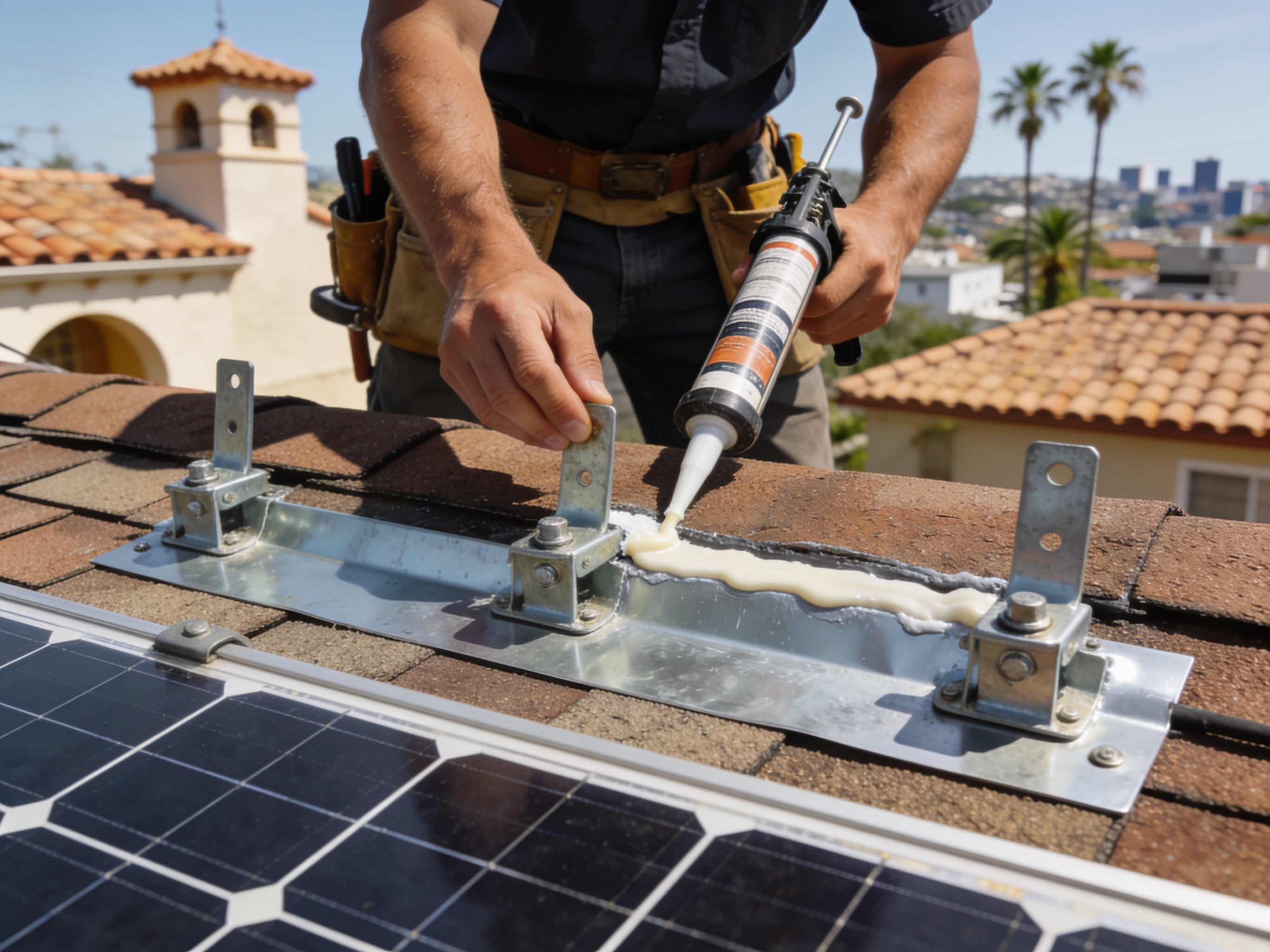
Sealing solar panel mounts with butyl tape and counter-flashing prevents leaks at every penetration point when done during initial install or repair in University Heights. This approach addresses the most common failure mode where water tracks under the mount base and into the attic or living space below.
Solar Mount Penetrations and University Heights Housing Stock
University Heights features many 1920s–1950s bungalows and early ranch homes that now carry solar arrays. These roofs often use composition shingles or older tile systems with original underlayment that has aged in the mild Mediterranean climate. The consistent year-round temperatures reduce freeze damage but allow salt-laden air from nearby La Jolla Cove and Pacific Beach to accelerate sealant breakdown around mount bases. Penetrations through the roof deck must be treated as permanent weak points; even small gaps allow wind-driven rain to enter during the occasional winter storms that hit San Diego County.
Flashing and Sealing Methods That Last
Installers first remove the shingle or tile course above each mount, then apply self-adhered butyl tape directly to the deck before setting the mount. A second layer of tape overlaps the mount flange, followed by counter-flashing tucked under the upslope course. On tile roofs common in the neighborhood, foam closure strips and additional butyl are used at the tile edges to block water migration. These steps create a redundant seal that outlasts the typical 8–12 year lifespan of basic caulk-only methods. Homeowners can verify the work by requesting photos of the tape layers before the final course is replaced.
Inspection Schedule for Existing Solar Arrays
Check mounts twice yearly, once after the dry season and once before winter rains. Look for cracked sealant, lifted tape edges, or rust at the mount feet. In University Heights, attic access often reveals water stains on rafters directly below arrays within two years of a missed seal failure. Use a moisture meter on sheathing if stains appear. When multiple mounts show issues, schedule leak detection rather than waiting for interior damage. Early intervention usually limits repairs to the affected penetrations instead of requiring broader roof leak repair.
Coordinating with Solar Panel Roof Repair
When a mount leak is confirmed, coordinate the fix through solar panel roof repair so the array can be safely lifted and reset. Technicians replace degraded underlayment in a 2-foot radius around each mount and reinstall with proper flashing. This integrated approach avoids the common problem of solar companies patching only the visible sealant while leaving the deck vulnerable. Residents near the 519 University Ave shop can often have the work completed in one day because crews already work regularly on North Park and Hillcrest roofs with similar vintage construction.
When Mount Leaks Signal Broader Issues
Recurring leaks at multiple mounts sometimes indicate underlayment failure across the entire array section rather than isolated seal problems. In those cases, compare the cost of targeted flashing repairs against a larger section replacement. The related article on calling for leak detection instead of full replacement covers decision factors that also apply in University Heights. Addressing the root cause early protects both the roof and the solar investment without unnecessary full-roof work.