
2026-08-21 ·
Identifying Hidden Leaks In Attics Of Coronado Homes
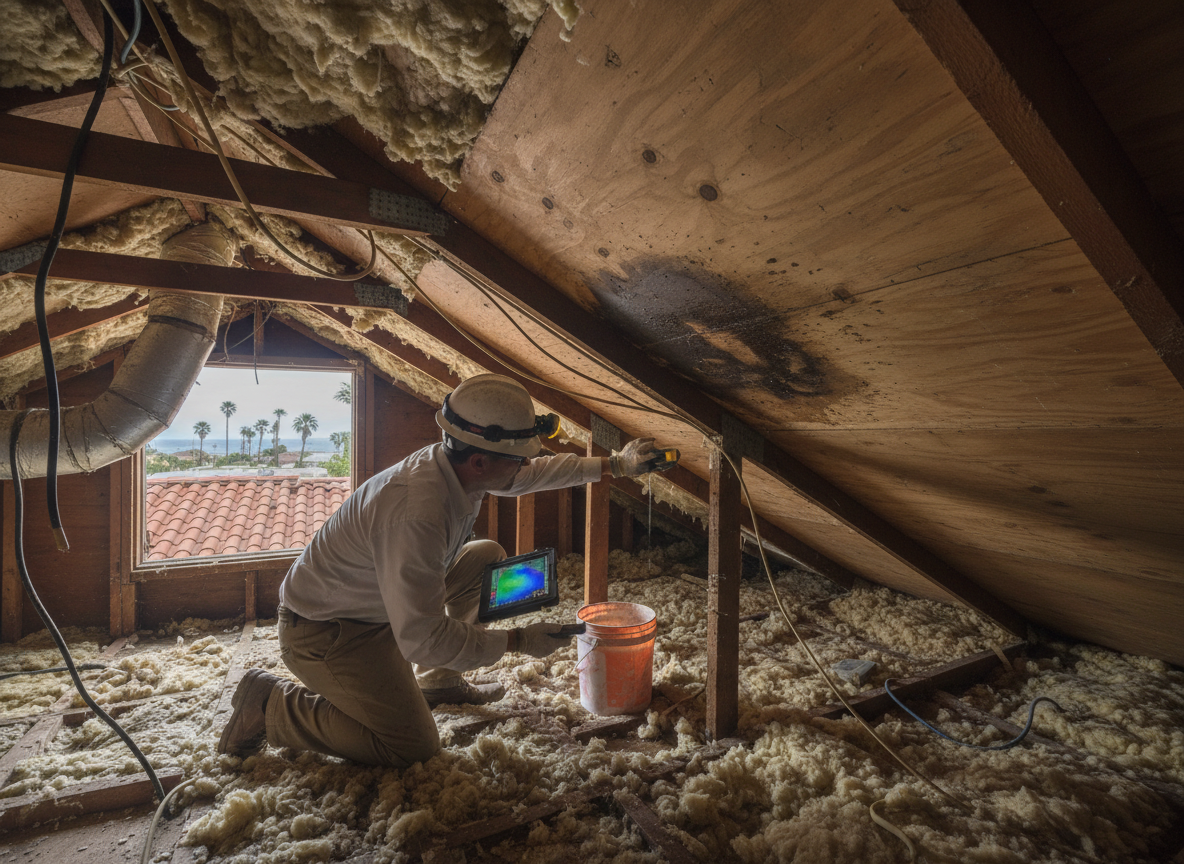
Hidden leaks in Coronado attics typically appear as dark water stains on rafters or compressed, discolored insulation within days of coastal fog or rain. These signs surface faster in homes built before 1970 because original flashing and underlayment degrade from constant salt exposure near the bay.
Common Causes Of Attic Leaks In Coronado
Coronado homes often feature tile or composition roofs installed decades ago that develop cracks where valleys meet chimneys. Salt air accelerates corrosion on metal flashing, allowing moisture to migrate under shingles during the mild but humid Mediterranean winters. Pacific storms push wind-driven rain into small gaps that expand over 8–12 years of exposure. Homes near the Coronado Bridge or along Orange Avenue face extra wear from constant marine spray that breaks down sealants quicker than inland spots like Mission Valley. Checking for these patterns starts with noting any recent heavy fog events that leave residue on attic vents.
Visual Signs Inside The Attic Space
Walk the attic during daylight and look for streaks of daylight around pipe penetrations or ridge boards. Dark rings on fiberglass batts or black mold streaks along ceiling joists indicate active moisture. In Coronado's older stock, sagging insulation near the eaves often signals water pooling from failed ridge vents. Use a strong flashlight to scan every 4–6 feet of sheathing; even small dark spots the size of a quarter can point to leaks that have already reached drywall below. Note any musty odor that lingers after the last rain, as this confirms hidden saturation in hard-to-reach corners.
Tools And Step-By-Step Inspection Process
Start with a moisture meter reading on rafters and sheathing; readings above 15% warrant closer examination. A thermal camera reveals cooler wet zones that standard lights miss, especially around skylight curbs or chimney flashing. Document each finding with photos and mark locations on a simple attic diagram before descending. Focus first on south-facing slopes that receive more sun and then check north slopes where fog lingers longer. Compare findings against known trouble spots such as where plumbing vents exit the roof deck.
When Professional Leak Detection Becomes Necessary
If moisture readings stay elevated after 48 hours of dry weather or visible mold covers more than a few square feet, contact a specialist for targeted testing. Leak detection services use infrared and electronic scanners that locate entry points without tearing out insulation. Coronado residents often pair this with roof leak repair to address both the symptom and source before damage spreads to living spaces. Delaying inspection allows rot to reach ceiling joists, turning a $400–$800 repair into full attic restoration.
Prevention Steps For Coronado Homeowners
Schedule annual attic checks each fall before winter rains arrive. Keep soffit and ridge vents clear of debris to maintain airflow that dries incidental moisture quickly. Replace aged flashing around chimneys and skylights every 15–20 years, especially on homes within a mile of the shoreline. Pair these checks with the guidance in How Salt Air Corrodes Roofs In La Jolla to understand regional patterns. Early attention to small gaps prevents the larger issues detailed in Spotting Early Signs Of Leak Damage In Ceilings Of South Park Homes.